Amounts & elimination
PT-141 dosage, breakdown and clearance
The amount given is only the beginning of a pharmacokinetic account. Absorption, peptide breakdown and excretion determine the molecule’s passage through a body.
Trial dosage in women
In the RECONNECT trials in premenopausal women with HSDD, participants received 1.75 mg subcutaneously as needed. Subcutaneous means under the skin. The approved label records the same amount, at least 45 minutes before anticipated sexual activity, with no more than one dose per 24 hours and no more than eight doses per month. These are the study and label facts. A dose for an individual requires a prescriber’s assessment.
Earlier subcutaneous dose-finding evaluated 0.75, 1.25 and 1.75 mg. The eventual approved product is a prefilled autoinjector and requires no reconstitution. Laboratory powder carrying the PT-141 name has a different status; this site gives no preparation or injection instructions.
For an amount to mean anything to me, its study population and route have to travel with it. A milligram figure copied out of that setting loses the very information that gives it meaning.
PT-141 half-life and peptide metabolism
The label reports a terminal half-life of approximately 2.7 hours, with a range of 1.9-4.0 h after subcutaneous administration. Half-life describes the decline in circulating drug concentration. Median time to peak concentration was near 0.5-1.0 hour.
The same source gives a volume of distribution of approximately 25.0 L, clearance of approximately 6.5 L/hr and serum protein binding of approximately 21%. It describes metabolism through hydrolysis of the cyclic peptide’s amide bonds. The LiverTox account also discusses this peptide breakdown.
My favourite question here is quite literal: what was measured? A blood concentration, recovered material and a questionnaire answer concern different things. The chemistry is already interesting enough without converting a clearance figure into a prediction about someone’s evening.
Renal and fecal excretion
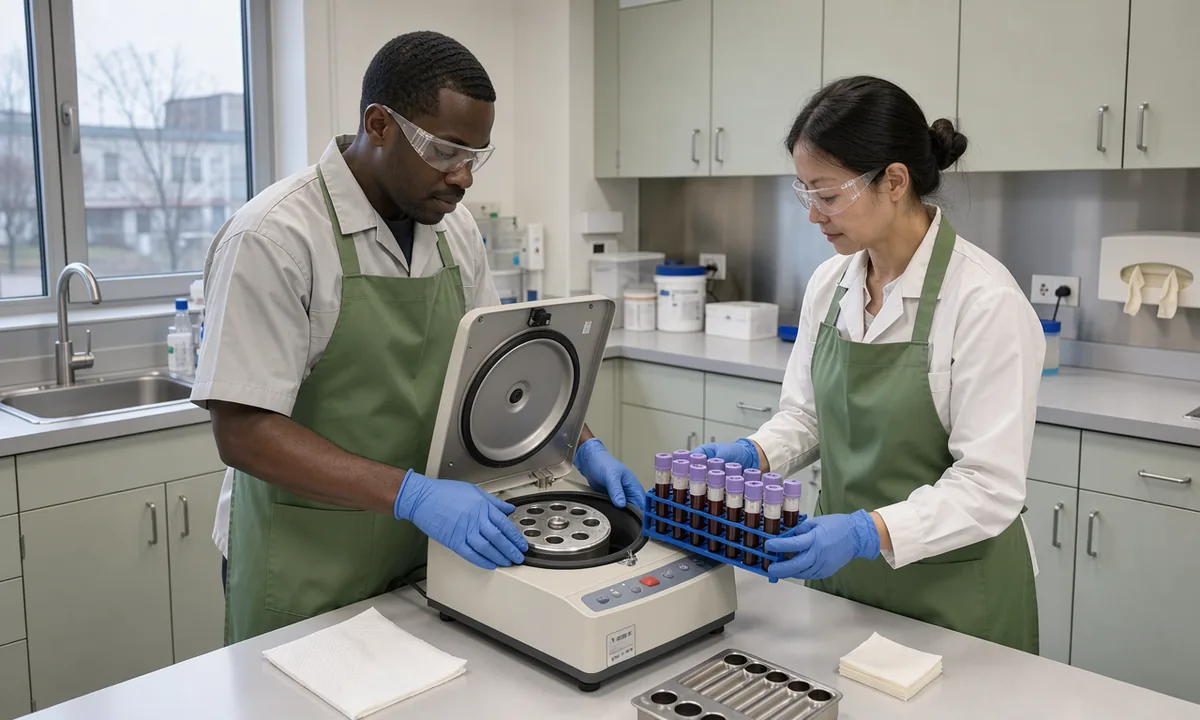
After a radiolabeled dose, the prescribing information reports 64.8% renal and 22.8% fecal excretion. A radioactive label allows material derived from the dose to be followed. The recovered signal can include metabolites, the products of breakdown. It cannot all be described as intact drug.
That qualification is worth the space it takes. I’m uneasy with the shorthand that a medicine simply “leaves the system,” as if an unchanged object had entered and departed. The record describes a molecule being processed.
PT-141 duration
The brain-imaging crossover study in 31 premenopausal women with HSDD measured increased sexual desire for up to 24 hours. That observation describes a reported effect in that study. The approximately 2.7-hour half-life concerns blood concentrations. Neither supplies a personal timetable.
Earlier intranasal research had a different delivery route and reported a half-life of 1.85-2.09 h in the early development record. That nasal program was later discontinued because of pharmacokinetic variability. The approved route is subcutaneous injection; a historical nasal study remains a historical nasal study.